
We push a high-resolution camera from the cleanout to the city tap, mark every defect by depth, and hand you the footage. No repair quote attached, no upsell.
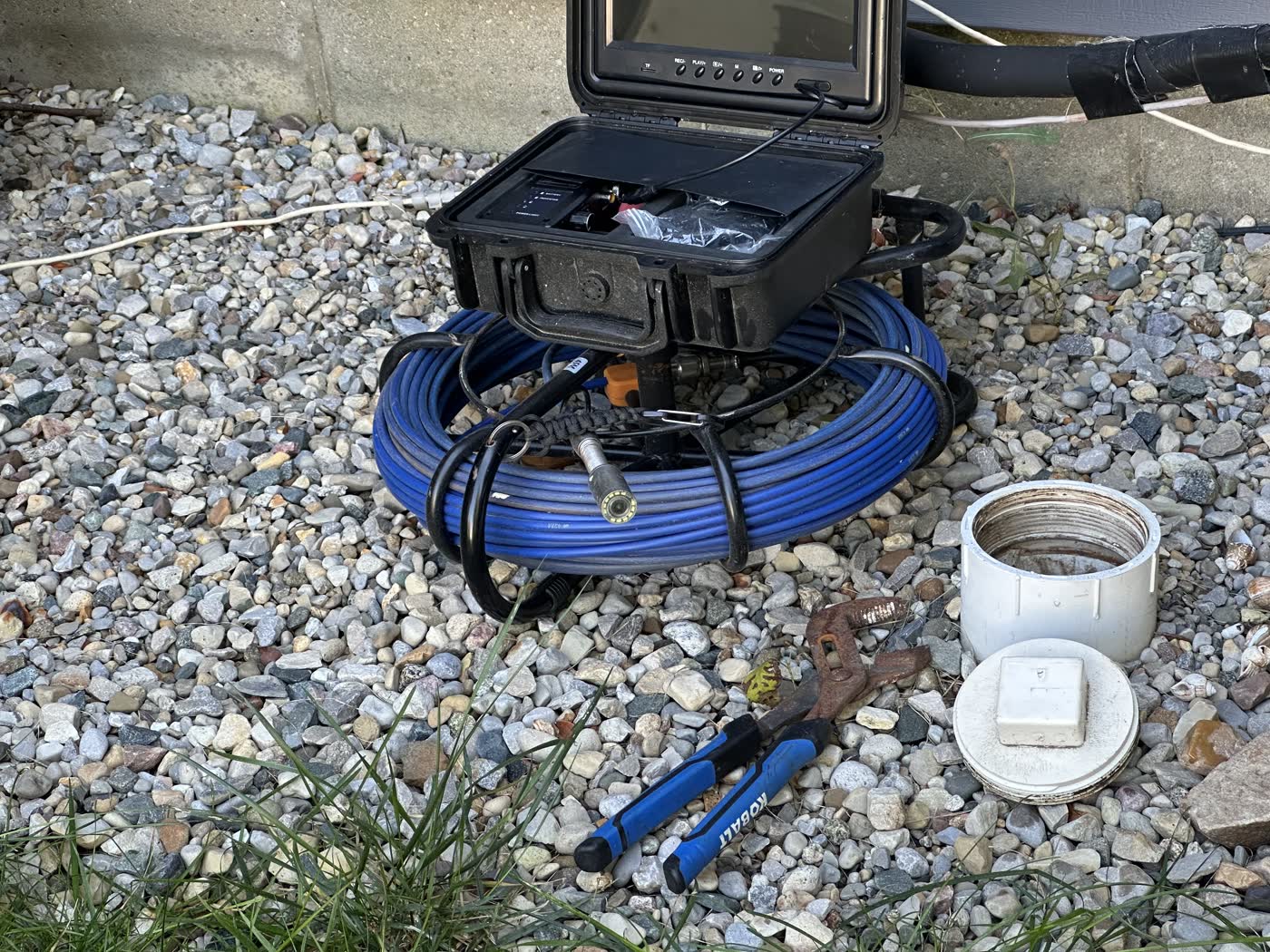
A sewer scope inspection is a video inspection of the sewer lateral line that runs from a home to the public sewer main, septic tank, or other disposal point. A small high-resolution camera attached to a flexible cable is pushed through the line, and the operator records footage of the interior of the pipe (Rocket Mortgage).
The line itself is the homeowner's responsibility in nearly every American municipality. In Marion County, the homeowner owns the lateral from the foundation to the connection at the city main (Citizens Energy Group). Whatever happens between those two points is on the homeowner. A scope is the only practical way to see it.
The International Association of Certified Home Inspectors classifies sewer scope as a recommended ancillary inspection for any home built before 1980, where Orangeburg or cast iron piping is statistically likely (InterNACHI). For homes built after 1980, scope-on-purchase is still common but discretionary. The standard answer for older Indianapolis stock is yes, always.
"We are not plumbers. We hand you the record." Patrick Grayson, founder · Sewer Scope
Every Sewer Scope inspection produces the same three things, in the same format, across every metro we run. Customers that hire us can count on consistency.
Full-resolution video from cleanout to city tap. Shareable link, no app required. Customers see what we saw.
1-page summary explaining everything we did and what we saw (roots, bellies, cracks, offsets and pipe material). An easy-to-read report that can be used for disclosures, negotiating, or getting quotes on repairs.
We don't bid the fix. We don't refer one plumber over another. The report is the report. The buyer chooses who repairs, on whatever timeline the closing allows.
Cleanout, code-approved access point, or pulled toilet. If there's no access, we tell you before we start. Never after.
High-resolution sewer camera runs from the access point through the lateral line out to the city tap.
Video capture of any finding: roots, bellies, cracks, offsets, separation, or material concerns.
PDF and shareable video link. Customers get the report quickly to keep their purchase on schedule.
Every booking comes from one of three desks. The footage is the same. The reason it gets ordered is not.
Scope during the inspection period. Verify the lateral before money moves. National replacement averages run into five figures, so a $200 to $300 scope is the cheapest insurance in the buyer packet.
Pre-purchase sewer scope →Scope before listing. Attach the report to the disclosure. A known condition you priced in is not the same as a deal-blowup discovered during the inspection period. Especially common across pre-1980 Indianapolis stock.
Pre-sale sewer scope →Schedule into the inspection period without losing days to plumber upsell. Same-week appointment standard, professional PDF, pay after inspection. Your buyers will thank you.
Realtor partnership →Sewer Scope inspections start at $200. The Indianapolis market sits in the $200 to $300 band for most laterals. National averages from Angi run $250 to $500 depending on access and lateral length (Angi cost data).
Now compare what the camera prevents. The average Indianapolis sewer line install runs $3,956, with the typical homeowner spending between $1,703 and $6,342 (Angi, Indianapolis). Full replacement of an Orangeburg lateral can hit $4,000 to $15,000 depending on depth, footage, and surface restoration (Patriot Dirt). A $200 scope is not a tax. It is the cheapest piece of information in the transaction.
Scopes invoice after the inspection. The buyer never writes a check on inspection day. That detail alone moves real-estate-agent referrals more than any other line in the engagement.
Every Sewer Scope report follows the same format. Page 1 is a plain-English summary in three sentences. Pages 2 through 6 are documented on video. The video link sits at the top of page 1 and stays live for 2 years.
We're finalizing the redacted sample for public download. In the meantime, if you're a realtor or buyer who wants a real example before booking, email Patrick and we'll send a redacted recent report from your metro.
Request a sample report →Questions taken from Google's People Also Ask panels, May 2026.
A sewer scope inspection is a video inspection of the sewer lateral line that runs from a home to the public sewer main, septic tank, or other disposal point. A small high-resolution camera on a flexible cable is pushed through the line and the operator records footage of the interior. The job ends with a video file, a PDF report, and a list of any defects found by depth.
Source · Rocket Mortgage, SpectoraMost residential inspections take about 25 to 45 minutes on site. Lateral length, access type, and surface conditions all change the math. The PDF report and shareable video link arrive within 24 hours of the visit and stay for 2 years.
Source · Alpha Environmental, Total House InspectionSewer Scope inspections start at $200. National averages from Angi land between $250 and $500 depending on access and footage. The Indianapolis market specifically tracks $200 to $300 for most residential laterals.
Source · Angi cost data, HomeGuideA specialist whose only job is the camera and the report. A plumber has a financial interest in finding work to quote. A specialist has a financial interest in handing you a clean record. InterNACHI documents the value of separating the camera operator from the repair vendor. Sewer Scope does scopes only, never repairs, never referrals to a specific plumber.
Source · InterNACHI, Pillar To PostRoot intrusion (roots cause more than 50% of all sewer blockages), bellies and sags from soil settling, offset joints, hairline cracks and full fractures, scale buildup in cast iron, deformation of Orangeburg pipe in homes built between 1945 and 1972, separation at the city tap, and any obstruction in the lateral line.
Source · ARS Rescue Rooter, Orangeburg pipe, WikipediaWhile older homes have a much higher rate of failure, about 50% of brand-new construction homes also reveal issues the homeowner should address. For pre-1972 Indianapolis stock specifically, the chance of Orangeburg in the lateral is high enough that the scope pays for itself many times over on most transactions. Tip: a sewer scope is not part of a standard home inspection. You order it separately. More on pre-purchase scope here.
Source · Nu Flow, InspectAPediaEnter your zip code, pick your date, and get your confirmation. Prefer phone or email? Reach your local office manager.
Book a Scope