
Patrick Grayson founded Sewer Scope in Indianapolis on one principle. The person who runs the camera should not be the person who quotes the repair. From there, the network is just a way to keep that principle intact at scale.
Patrick Grayson founded Sewer Scope on one observation. The sewer scope industry was structurally biased. The camera operator and the repair vendor were almost always the same plumber. The buyer paid $200 for a camera run. The plumber walked away with a $9,000 dig quote. The deal blew up. The agent called somebody else next time.
Patrick's thesis was that a category specialist with no repair revenue would close more deals on time, earn more agent referrals, and outlast the plumbers who treated scope as a lead-gen funnel. Six years later that thesis is 67 five-star Google reviews on the Indianapolis profile and a working franchise across four metros.
Patrick now runs franchise development for the network. The day-to-day on every metro belongs to a local operator. The standard belongs to the network.
"We are not plumbers. We hand you the footage and the report. Just honest reporting, no ulterior motive." Patrick Grayson, founder · Sewer Scope
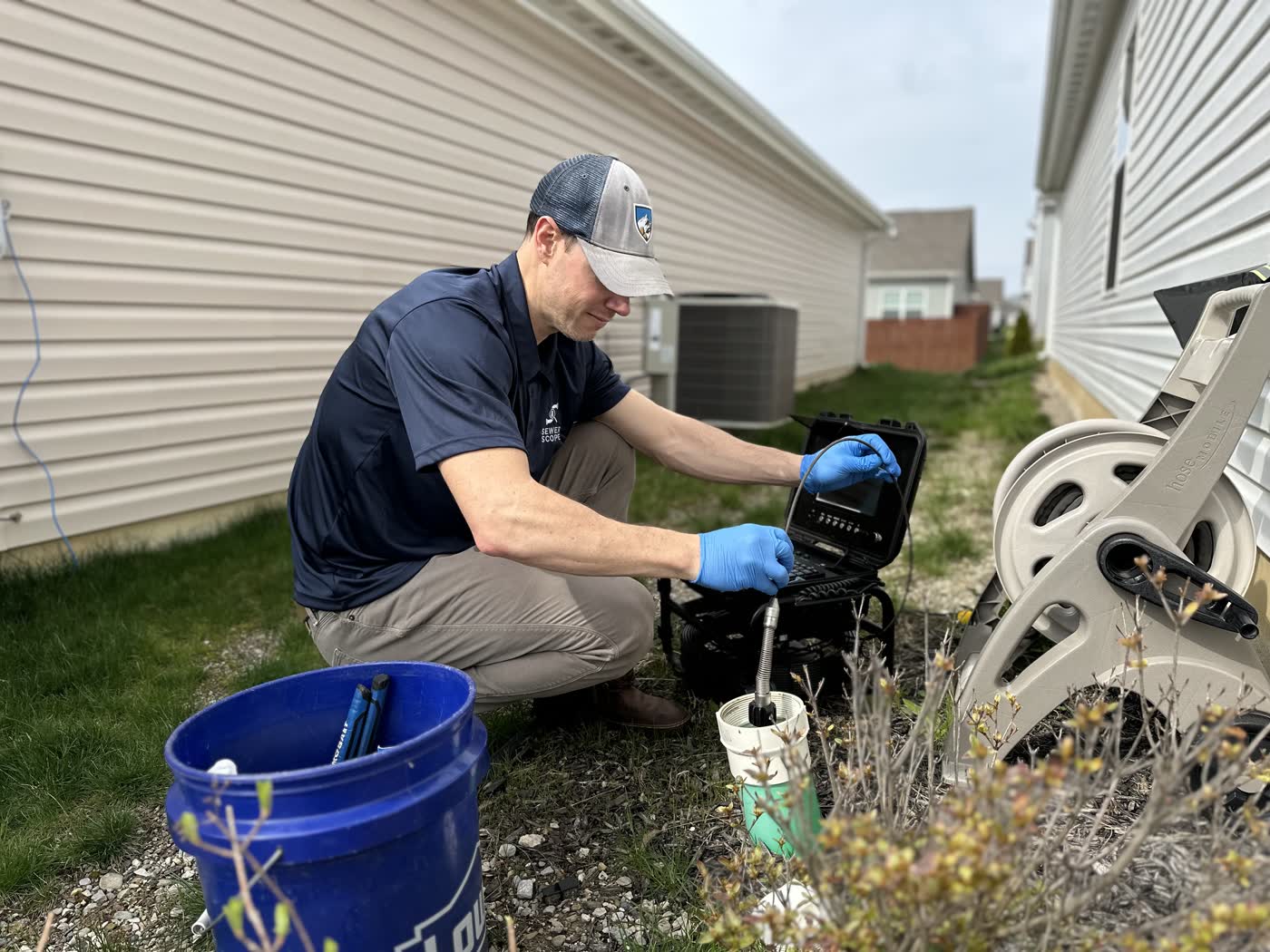
Most home-services franchises run wide. Plumbing, HVAC, electrical, drains. Sewer Scope runs narrow on purpose. One job, one camera, one report format, one positioning line. The narrowness is the unit economics.
One sewer camera rig, one laptop, one seat. That's the bag. A new operator is on the truck inside two weeks. Compare a multi-trade plumbing franchise where the equipment alone runs into six figures (IBISWorld, US plumbing industry).
Home buyers typically have an inspection window on every transaction. The US sees roughly 4 to 5 million existing-home sales per year (US Census, NAR research). For pre-1980 homes in any metro we operate, the scope is the default add-on.
Booking, dispatch, report generation, and customer follow-up all run on the same proprietary software. A new operator inherits the workflow. No "build your own back office" tax. No two metros producing different report formats.
Every metro has its own operator. The standard is centralized. The face is local.
Michael Cashen runs Indianapolis day-to-day operations, with a new operations manager transitioning in over the coming weeks. Marion, Hamilton, and Hendricks counties, with Fort Wayne dispatch under the same desk.
Brandon runs Cincinnati. Hamilton, Butler, and Warren counties. Same camera, same specialist report, same "we are not plumbers" line at every doorstep.
Shaun Martin operates the Front Range Sewer Scope brand inside the Sewer Scope network. Largest single-metro demand on the network. Front Range corridor coverage.
The American Society of Home Inspectors and the International Association of Certified Home Inspectors both recommend separating the inspection vendor from the repair vendor on real-estate transactions. The structural conflict of interest is well documented (InterNACHI, ASHI Standards of Practice).
Every operator in the Sewer Scope network has signed on to that principle as the floor of the business model. We do not bid the fix. We do not pay or receive referral fees. The standard is the same in Indianapolis, Cincinnati, Denver, and Fort Wayne, and it will be the same anywhere you see the Sewer Scope brand.
The franchise system exists to keep that principle intact while the network grows. Patrick's job, on the operations side, is to make sure no operator drifts.
The roadmap calls for 50 operating territories inside 5 years. The next two metros prioritized after the current four are Chicago (4-5 territories possible) and Atlanta. Patrick handles franchise development directly.
Unit economics, target metros, who we look for in an operator, and how the standard gets installed in week one. The full case for becoming an operator inside the SSU network.
Read the franchise page →The original metro. 67 five-star Google reviews. The site that proved the thesis. Marion, Hamilton, and Hendricks county coverage. The bar every other metro is measured against.
Indianapolis metro →Realtor partnership, franchise development, or "how do you do that thing you said in paragraph three." Patrick reads his own email.