
Carmel is a city of two sewer-stock conversations on the same map. The Carmel Arts and Design District (Old Town Carmel) is the oldest part of the city, with original residential and mixed-use buildings dating from 1900 to 1940, sitting on vitrified clay tile laterals plus first-generation cast iron stacks. The Village of WestClay, Bridgewater Club, Brookshire, and the 1990s-and-later subdivisions across the rest of the city sit on PVC. A pre-purchase scope is the only way to tell which group the property belongs to without tearing up the yard. Same professional report and high quality video. Same 24-hour turnaround. Same clean handoff. About 25 minutes on site.
Carmel is the largest city in Hamilton County and the most populous suburb of Indianapolis, with a 2020 census population of 99,757 according to the U.S. Census Bureau QuickFacts for Carmel. Median home sale prices crossed $500,000 in 2025 across the city's two main ZIPs, 46032 (west Carmel including Old Town) and 46033 (east Carmel including Brookshire and toward the Hamilton County line). The price tier matters less than the build year for the scope conversation.
Old Town Carmel anchors the southwest corner of the city around Range Line Road, Main Street, and 1st Avenue NW. The Carmel Arts and Design District (per Carmel Arts and Design District) curates the historic core: art galleries in former bungalows, restaurants in former hardware stores, residential blocks of 1910-1935 single-family homes interspersed with newer infill. Original laterals on Old Town Carmel blocks are vitrified clay tile in short mortared sections. First-generation cast iron from the same era runs the foundation-wall penetration to the basement floor on most pre-1940 homes. Many laterals have been replaced once already. Replacement work in the 1945 to 1972 window is sometimes Orangeburg, which means the "replacement" is itself now past 50-year useful life.
The Village of WestClay sits in the northwest corner of Carmel and was platted in the late 1990s as a New Urbanist mixed-use master-planned community. Construction ran from 1998 through approximately 2010, with PVC laterals throughout, and the village now contains roughly 1,500 homes plus a town center. Bridgewater Club (the country-club community in northwest Carmel along West Bridgewater Drive) was developed in similar 1998-2008 timing with PVC. Brookshire (mid-century to 2000s) holds a mix of 1970s ranches with cast iron stacks and PVC laterals plus newer infill. Stonewick, the Stanford Estates, and the various subdivisions off Clay Center Road, Towne Road, and Spring Mill Road are all 1990-and-later PVC.
The Carmel Utilities sewer system serves most of the city directly. Carmel Utilities (per City of Carmel Utilities) is a municipal utility distinct from Citizens Energy Group. The lateral-vs-main ownership boundary varies slightly by subdivision but generally tracks the property line. Carmel Utilities sets its own connection fees and permit requirements, which differ from the Marion County / Indianapolis Department of Public Works pattern. Always confirm jurisdiction at the specific address before any repair quote.
The soil under Carmel is dominated by Crosby silt loam with Brookston silty clay loam in the low areas along Williams Creek and Cool Creek, per USDA NRCS mapping. Behavior is similar to the rest of Hamilton County and to Marion County. The freeze-thaw cycling and clay-soil moisture retention drive belly formation in older laterals, particularly in the postwar pockets along Carmel Drive and the older streets between Range Line and Keystone.
The tree canopy in Carmel reflects the two-era split. Old Town Carmel and the original streets running off Range Line Road feature mature silver maple and pin oak planted between the 1920s and 1960s, with significant root-intrusion potential where laterals run within 30 feet of a mature tree. Village of WestClay and the newer subdivisions have planned mixed canopies (red maple, sugar maple, sweetgum, redbud, ornamental pear) on younger root systems, with correspondingly lower root-intrusion findings on the scope log. The Indiana DNR's urban forestry references catalog the regional canopy in detail (per Indiana DNR Community Urban Forestry).
1. Cast iron stack scale at the foundation wall (peak prevalence: all Carmel homes built before 1990). The cast iron sewer stack inside the house and the cast iron stub through the foundation wall is mid-life on any pre-1990 Carmel home. Cast iron has a 50 to 100 year lifespan with deterioration commonly beginning after 25 years per Balkan Plumbing's lifespan reference. Hamilton County's Crosby silt loam plus seasonal moisture in basements accelerates corrosion at the foundation penetration. On camera the first 4 to 8 feet from the camera entry typically shows narrowed diameter and rough orange-brown scale on the bottom. Indianapolis-area descaling rates run $200 to $800 (per Benjamin Franklin Plumbing's descaling cost reference) and can extend useful life decades.
2. Clay-tile lateral failure in Old Town Carmel (peak prevalence: 46032 between Range Line Road and Keystone Parkway, 1900-1940 builds). Vitrified clay pipe at the body level can last 100 to 150 years, but the mortared joints between short sections fail at a much shorter timeline. Most Old Town Carmel original laterals have been repaired or replaced at least once, often during the 1945 to 1972 Orangeburg window. The defect catalog matches Marion County's bungalow belts: joint separation, root intrusion at joints, partial section collapse, offset shifts. On camera: visible stepping at joints, rope-thick root intrusion in the joints, or a pinched section where the pipe shape has deformed. Repair runs from spot trenchless lining at $1,500 to $3,500 to full lateral replacement at $4,000 to $15,000 depending on length, depth, and surface restoration in Carmel's historic district.
3. PVC joint separation in 1995-2005 builds (peak prevalence: Village of WestClay, Bridgewater Club, and the early Brookshire infill). The PVC laterals installed during Carmel's boom years are 20 to 30 years old today, which is the window where freeze-thaw soil movement and uneven trench-bedding standards from the original builder boom can pull joints slightly apart. The gap is usually a quarter inch or less but it is enough for moisture-seeking maple or oak roots to find. On camera: a small visible step at a joint, sometimes with hairline roots threading through. Repair is typically trenchless lining at the joint ($1,500 to $4,000) or spot excavation ($1,500 to $3,500). The Uni-Bell PVC Pipe Association catalogs installation-defect patterns of this type in detail (per Uni-Bell PVC Pipe Association).
4. Silver-maple root intrusion in Old Town Carmel (peak prevalence: blocks within 30 feet of mature silver maple lots). The silver-maple monoculture that defines Marion County's bungalow belts also extends into Old Town Carmel, though at lower density. Where original 1920s lots received silver maple plantings that have since matured to 70+ years old, root intrusion at clay-tile or Orangeburg joints is essentially guaranteed. Root-intrusion findings drive more than 50 percent of all sewer blockages nationally (per ARS Rescue Rooter's root intrusion reference), and Old Town Carmel's older lots score at the high end of that distribution. Repair runs $1,500 to $5,000 for spot clearing, $1,500 to $3,500 for trenchless lining of recurring intrusion zones.
One additional Carmel note: the Carmel Arts and Design District's mix of historic commercial and residential buildings means some Old Town addresses have shared-use lateral runs that connect multiple parcels to a single mainline tap. The scope still works the same way but the camera path may extend beyond what a buyer assumes is "their" lateral. Confirm jurisdiction with Carmel Utilities at the address before any repair work.
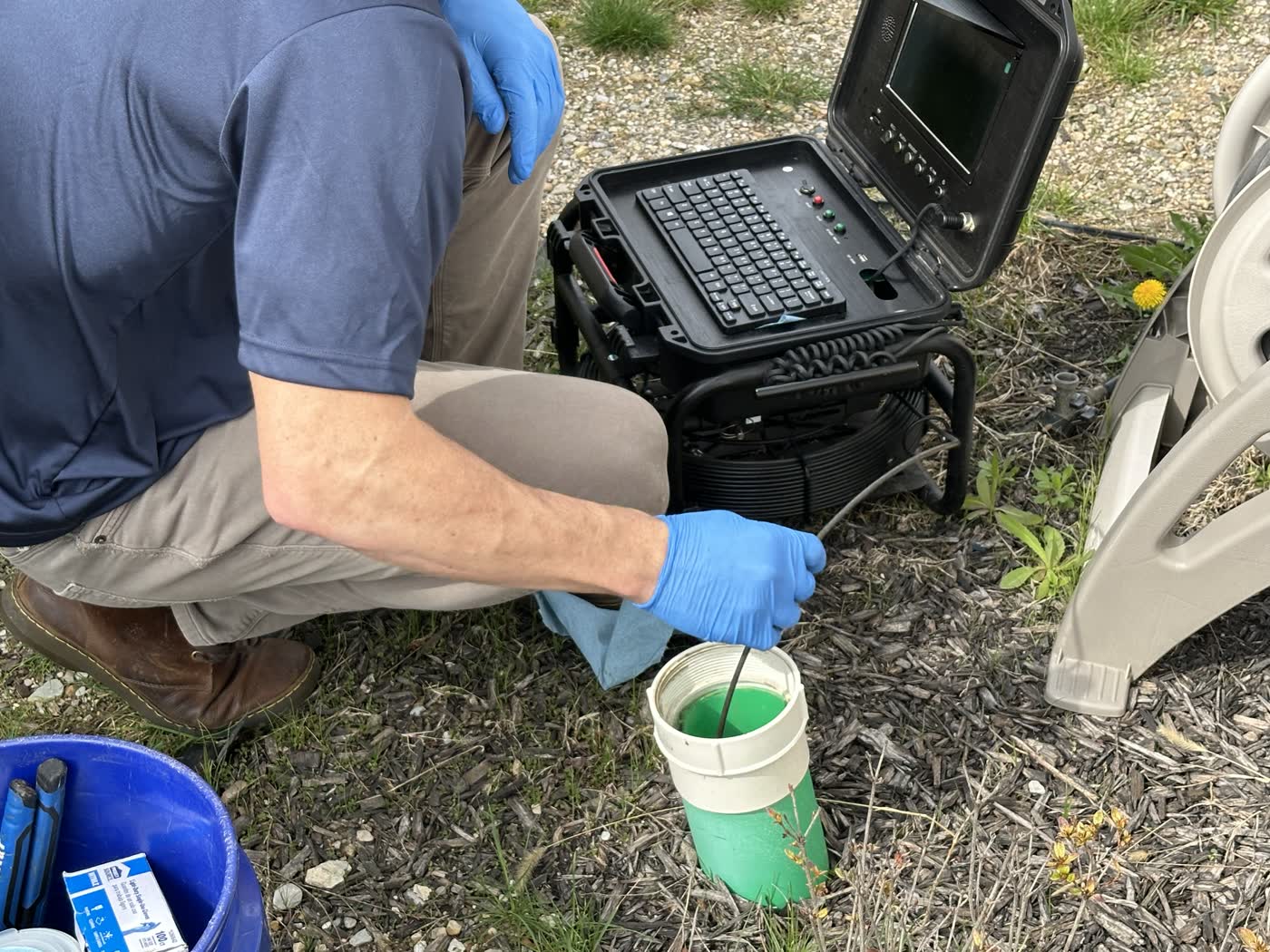
Carmel inspections run on the same platform as every other Sewer Scope job. Booking by phone at (317) 210-0084 or online. Same-week appointment standard. The technician arrives in the inspection-period window, locates the cleanout (sometimes a hunt in Old Town Carmel pre-1940 homes that predate code-mandated accessible cleanouts), runs the camera from access to the Carmel Utilities city tap with footage marked, and packs out. The platform packages full HD video plus video capture into a single shareable PDF and video link.
Turnaround is roughly 24 hours from camera-back-in-the-truck. The report and shareable video go directly to you, the customer, so you can pass them along to your agent, lender, plumber, or anyone else, exactly as you see fit. Clean: no kickbacks, no co-marketing strings, no plumbing referral built into the workflow. Sewer Scope does not bid repairs. The buyer's plumber bids the fix from the report, on whatever timeline the closing allows.
Need a specific address verified? Call (317) 210-0084. Same-week scheduling.
The City of Carmel does not mandate a sewer scope on a private residential sale. There is no Carmel ordinance compelling one, and the Hamilton County Recorder does not require scope documentation for closing. A pre-purchase scope is voluntary buyer due diligence. Carmel Utilities handles permitting and ownership of the main, with the lateral owned by the homeowner from the foundation to the main connection point.
Source: City of Carmel UtilitiesYes. Old Town Carmel (Range Line Road, Main Street, the Carmel Arts and Design District) holds the oldest residential and mixed-use stock in the city, with original construction running 1900 through 1940. Original laterals are vitrified clay tile in short mortared sections plus first-generation cast iron stacks. Many have been replaced once already, often during the 1945 to 1972 Orangeburg window. Defect-find rate in Old Town Carmel approaches Marion County bungalow-belt rates.
Source: Sewer Scope Indianapolis camera log · Carmel Arts and Design DistrictCarmel sewer lateral repair costs are comparable to Marion County: $1,500 to $5,000 for belly repair, $1,500 to $4,500 for offset or crack lining, $1,500 to $4,000 for full Orangeburg or clay-tile lateral replacement. Carmel Utilities permit fees and connection requirements differ from the Indianapolis Department of Public Works pattern. Confirm at the specific address with Carmel Utilities before any contractor quote.
Source: Carter's My Plumber Indianapolis cost dataYes. The Village of WestClay was platted in the late 1990s and built primarily 1998 through 2010 with PVC laterals throughout, so it is lower risk than older Carmel stock. But it is not risk-free: even newer homes fail a sewer scope about 40% of the time, so a scope is still worth it as cheap insurance and to document the lateral condition for buyer records. The same applies to Bridgewater Club, Brookshire, Stonewick, and other 1995-or-later Carmel subdivisions.
Source: Uni-Bell PVC Pipe AssociationYes, particularly in Old Town Carmel and along the Monon Trail corridor where mature silver maple and oak were planted between the 1920s and 1960s. Mature trees within 30 feet of a lateral materially increase root intrusion risk. The Indiana DNR Division of Forestry documents urban canopy data by community. Newer Carmel subdivisions have planned tree mixes that reduce single-species root pressure on lateral runs.
Source: Indiana DNR Community Urban ForestryCarmel Utilities operates the City of Carmel sewer system. Carmel Utilities is a municipal utility, separate from Citizens Energy Group which handles much of the rest of Hamilton County and Marion County. Carmel Utilities sets the lateral-vs-main ownership boundary at the property line in most subdivisions. Confirm specific ownership at the address before any repair quote.
Source: Carmel UtilitiesCarmel is one of the highest-volume buyer markets in the metro for MIBOR agents (per MIBOR Realtor Association). The Old-Town-vs-newer-subdivision split makes the scope conversation more nuanced than a Marion County one. About 80% of our inspections turn up some deferred maintenance on the sewer line, so a pre-sale scope on a $750K Bridgewater Club listing gives the seller a real advantage in negotiations and helps the buyer avoid any unwanted (and sinky) surprises after closing. Realtor Partner Program covers the pre-sale add-on and pay-after-inspection billing.
The full county profile. Carmel is one of four major cities. Newer construction dominant, older pockets concentrated.
Carmel's eastern peer city. Nickel Plate District new builds plus 1990s subdivisions plus Geist perimeter 1960s clay-tile pockets.
Boone County village immediately west. Brick-paved Main Street historic district plus newer outer subdivisions.
Hamilton County seat, 12 miles northeast. Historic downtown square plus Morse Reservoir perimeter.