
Fishers is one of the youngest housing-stock cities in the Indianapolis metro and one of the most uneven in lateral profile. The Nickel Plate District is post-2010 mixed-use with brand-new PVC. The 1990s and 2000s subdivisions across the rest of the city carry PVC laterals approaching mid-life. The Geist Reservoir perimeter, the lake-cottage holdovers from before Fishers exploded as a suburb, hosts a small but meaningful set of 1960s-1970s homes with original clay-tile or first-generation cast iron laterals, plus a layer of septic-system properties that predate the Fishers municipal sewer expansion. Three different scope conversations, one city, one report format.
Fishers became a city in 2015 and had a 2020 census population of 98,977, up from 76,794 in 2010 (per the U.S. Census Bureau QuickFacts for Fishers). The growth pattern explains the scope conversation. Fishers grew explosively through the 1990s and 2000s as Indianapolis-suburb buyers moved north along Interstate 69 and State Road 37. Most Fishers housing built between 1995 and 2010 sits on PVC laterals, in early to mid-life today.
The Nickel Plate District is the post-2010 layer. Downtown Fishers redeveloped along the former Nickel Plate rail line into an urban-mixed-use district that includes The Yard at Fishers District, the Switch on 116th, the Edge apartments and condos, and the Hamilton County Theatre (per the City of Fishers for current district details). Construction here is brand-new PVC laterals running into city tap on the Citizens Energy Group system. Condos and townhomes typically share a building lateral that connects to the city tap via a single feeder. A pre-purchase scope on a Nickel Plate property runs from the unit's cleanout out to that shared lateral connection point and documents both the unit's section and the visible portion of the shared run.
The 1990s and 2000s subdivisions across the rest of Fishers carry the bulk of the city's housing. Sand Creek (north of 116th Street), Brooks Hill Estates, Lantern Lakes, Saxony, Springs of Cambridge, Steeplechase, and the many subdivisions along State Road 37 and Olio Road were built primarily 1995 through 2010 with PVC laterals. These laterals are now 15 to 30 years old. Joint separation from freeze-thaw soil movement, particularly in subdivisions where original trench-bedding was below the contemporary spec, is the most common defect we find in this layer.
The Geist Reservoir perimeter is the older layer. Geist Reservoir was created in 1943 (per Indianapolis Water Company / Citizens Energy Group history) and the early lake-cottage development on the Hamilton County side ran 1950s through 1970s. Many original Geist homes were initially weekend cottages with clay-tile or first-generation Orangeburg laterals running to private septic systems. As Fishers grew through the 1990s, the city extended municipal sewer service to many Geist neighborhoods, but the older homes have a mixed history of lateral replacement timing. Some Geist homes were re-piped to PVC during the sewer expansion. Some kept their original clay tile lateral and were simply tied into the new municipal main. A scope clarifies which group the property belongs to.
Hamilton County Soil and Water Conservation District maps Fishers as predominantly Brookston silty clay loam and Crosby silt loam in the southern half, with Miami silt loam on the rolling terrain north of 116th Street (per Hamilton SWCD). The same clay-soil behavior that drives belly formation in Marion County drives it in Fishers too, particularly in the older 1990s subdivisions where shallow trench-bedding standards from the early builder boom intersect with three decades of freeze-thaw cycling. The Nickel Plate District's contemporary construction sits on engineered fill and modern compaction standards that materially reduce belly risk on those new builds.
The tree canopy across Fishers is younger than Carmel's Old Town or Marion County's bungalow belts. Newer subdivisions feature planned mixes of red maple, sweetgum, pin oak, and ornamental species, with mature shade trees concentrated in the Geist Reservoir perimeter lots where 1960s plantings (silver maple, white oak) have reached 65+ years. The Indiana DNR Division of Forestry catalogs the regional canopy (per Indiana DNR Forestry) and the older Geist lots are the most likely place to find root-intrusion findings on a Fishers scope.
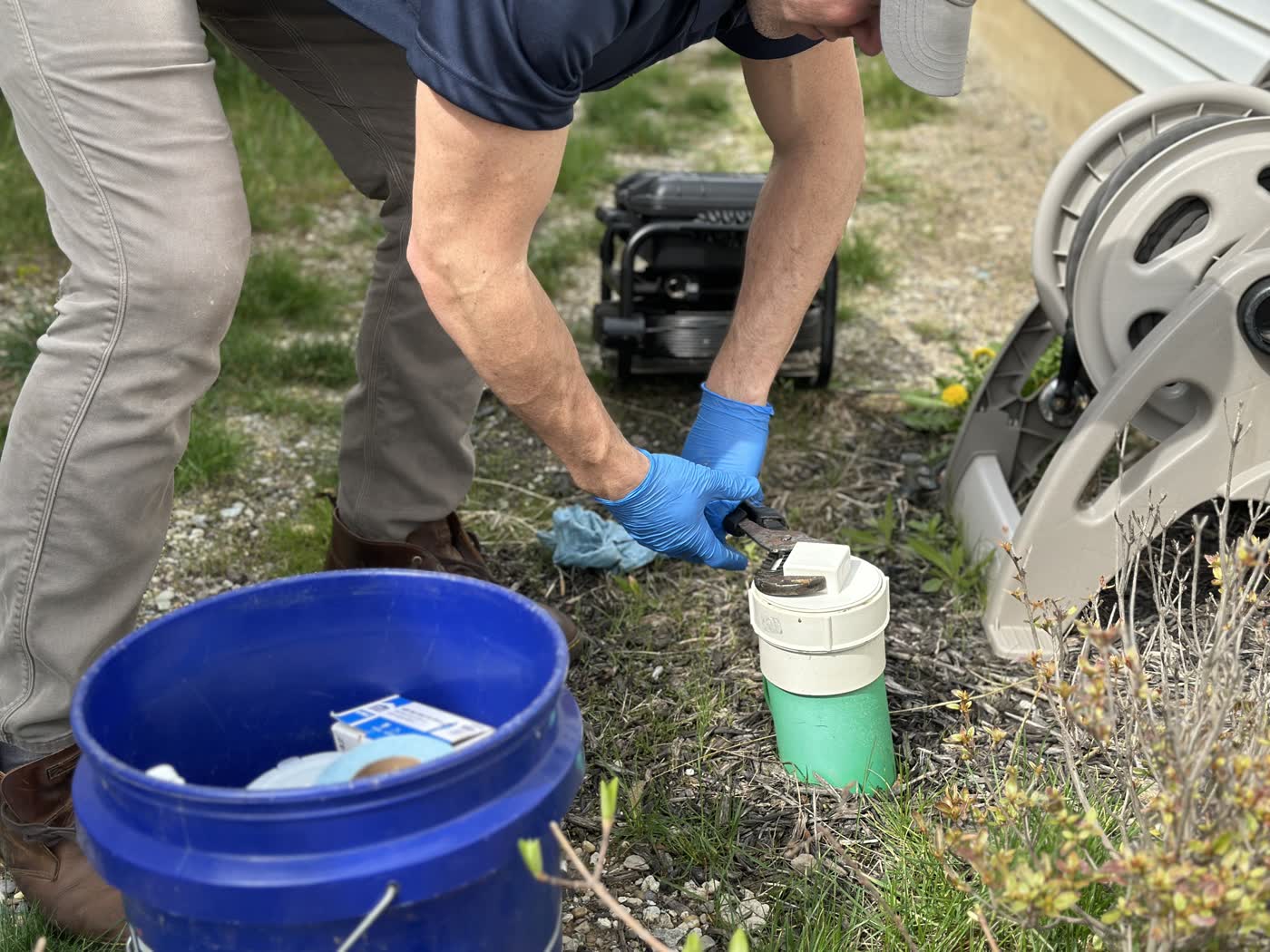
1. PVC joint separation in 1995-2005 subdivisions (most common Fishers finding). The bulk of Fishers housing stock falls in this window, and the most common scope finding is hairline joint movement plus small root intrusions. PVC pipe at the body level has a 50+ year useful life under proper installation per Uni-Bell PVC Pipe Association. The failure mode is the joint, not the pipe. In Fishers' clay-rich soils, freeze-thaw movement gradually pulls PVC joints apart over a 20 to 30 year window. The gap is usually a quarter inch or less but enough for moisture-seeking maple or oak roots to find. On camera: visible hairline roots threading through a clean PVC joint, or a small step where the section has shifted. Repair is typically trenchless lining at the joint ($1,500 to $4,000) or spot excavation ($1,500 to $3,500).
2. Belly formation in early-2000s Sand Creek and Olio Road builds (specific to the 2001-2008 boom window). A subset of Fishers subdivisions built during the peak boom years used trench-bedding standards that varied across crews and weather conditions. Twenty years later we see a measurable belly in roughly one in every six to eight inspections on early-2000s Fishers builds, mostly in subdivisions where the lateral runs through soft fill near the foundation. On camera: the camera tilts down then back up through a low spot, and water pools in the dip. Belly repair runs $1,500 to $4,500 for the section work in Hamilton County, per Carter's My Plumber Indianapolis belly cost data. Trenchless lining cannot fix a sagged grade. The pipe has to come up, the grade has to be re-set, and the line has to go back down.
3. Clay-tile and Orangeburg laterals in Geist Reservoir lake-cottage holdovers (concentrated: 46037 lake-perimeter blocks built 1955-1975). The Geist perimeter is the only part of Fishers with meaningful pre-1980 lateral risk. Original clay-tile or first-generation Orangeburg laterals from the lake-cottage era are now well past useful life. The defect catalog matches Marion County's bungalow belts: joint separation, root intrusion, partial collapse, offset shifts. On camera in older Geist homes: rope-thick root intrusion at joints, visible Orangeburg deformation. Repair runs $1,500 to $5,000 for full Orangeburg lateral replacement (per Patriot Dirt's Indianapolis cost data). Some Geist homes are still on septic, in which case the camera path terminates at the tank inlet.
4. Shared-lateral connection issues on Nickel Plate condos and townhomes. For Nickel Plate District multi-unit properties, the lateral from the individual unit cleanout out to the building's shared connection is typically the unit owner's portion. The shared building lateral from there to the city tap is the HOA or building owner's responsibility. On a scope we document both visible portions but the boundary matters for the repair conversation. Confirm at the specific address with the building management.
The Indiana State Department of Health's on-site sewage system rules (per IDOH On-Site Sewage Systems Program) apply to the Geist Reservoir septic holdouts. The Hamilton County Health Department administers permits and inspections locally. The American Society of Civil Engineers tracks root intrusion and joint failure as leading drivers of sanitary sewer issues nationally (per ASCE Infrastructure Report Card on wastewater).
Fishers inspections run on the same platform as every other Sewer Scope job. Booking by phone at (317) 210-0084 or online. Same-week appointment standard. For city-sewer properties (most of Fishers including Nickel Plate, Sand Creek, Hamilton Town Center, Brooks Hill, Saxony) the camera runs from cleanout to Citizens Energy Group city tap. For septic holdouts (a small set of Geist Reservoir 1960s lots) the camera runs from cleanout to tank inlet, with inlet condition photographed. Sewer Scope does not perform septic system inspections directly. We refer buyers to IDOH-approved septic inspectors for the full system evaluation when the property is on septic.
report turnaround is roughly 24 hours. The report and shareable video go directly to you, the customer, so you can pass them along to your agent, lender, plumber, or anyone else, exactly as you see fit.
For homes built after 2000 in Fishers, the lateral is almost always PVC, so the defect-find rate is lower than older areas, but it is not low: even newer homes fail a sewer scope about 40% of the time, so a scope is still worth it as cheap insurance and to document the pipe condition for the buyer's records. Fishers homes built before 2000 deserve a scope: the 1995-1999 PVC window in particular catches early-builder-boom installation variability. Homes on Geist Reservoir built 1960s-1970s carry meaningful clay-tile or first-generation cast-iron lateral risk and a scope is essentially mandatory due diligence.
Source: Uni-Bell PVC Pipe Association · Sewer Scope Indianapolis camera logMany lake-perimeter Geist Reservoir properties on the older 1960s lots predate the Fishers municipal sewer expansion and are still on private septic systems administered by the Hamilton County Health Department. Other Geist homes were connected to sewer when Fishers expanded service in the 1990s and 2000s. The boundary varies street by street. Always confirm at the specific address before booking the inspection type.
Source: Indiana State Department of Health On-Site Sewage Systems ProgramThe Nickel Plate District is downtown Fishers, the urban-mixed-use redevelopment area along the former Nickel Plate rail corridor, including The Yard, the Switch, the Edge, and the Nickel Plate Trail. Construction is post-2010 with new PVC laterals on most parcels. The scope on a Nickel Plate condo or townhome typically shows clean newer pipe. Confirm whether the building is on individual lateral or shared building lateral with the management company before the inspection.
Source: City of FishersFishers contracts with Citizens Energy Group on most of its sewer service. Citizens Energy Group operates as a public-charitable trust. Confirm jurisdiction at the specific address. The lateral-vs-main ownership boundary varies by subdivision but generally tracks the property line in Fishers.
Source: Citizens Energy Group service-line guidanceMost Hamilton Town Center area subdivisions were built 1995 through 2010 with PVC laterals and carry a lower defect-find rate than older areas, but it is not low: even newer homes fail a sewer scope about 40% of the time, so a scope is still worth it as cheap insurance. The PVC laterals in this window are now 15 to 30 years old, which puts the older end of the range in the joint-separation watch zone where we begin to find hairline root intrusions at joints.
Source: Sewer Scope Indianapolis camera logFishers lot sizes vary widely. Older Geist Reservoir homes can have lateral runs of 100 to 200 feet from house to tap because of the lakefront setback. Inner subdivisions off State Road 37 and 116th Street have typical 50 to 80 foot lateral runs. Nickel Plate condos and townhomes typically have 20 to 50 foot runs to a shared building line. Longer runs add minor on-site time but the same 24-hour report turnaround applies.
Source: Sewer Scope Indianapolis on-site measurement logFishers is one of the highest-volume newer-construction markets in the metro for MIBOR agents (per MIBOR Realtor Association). The Geist Reservoir question makes the scope conversation more nuanced than a clean newer-build conversation. About 80% of our inspections turn up some deferred maintenance on the sewer line, so a pre-sale scope on a $450K Sand Creek listing gives the seller a real advantage in negotiations and helps the buyer avoid any unwanted (and sinky) surprises after closing. Realtor Partner Program covers the pre-sale scope add-on for Fishers listings and pay-after-inspection billing.
Full county profile. Fishers is one of four major cities. Newer construction dominant.
Fishers' western neighbor. Old Town historic district plus Village of WestClay. Carmel Utilities (not Citizens) operates Carmel.
Hamilton County seat to the north. Historic downtown square plus Morse Reservoir perimeter.
Indianapolis just south. The dense pre-1980 bungalow belts that anchor the metro defect catalog.